What to log in a mood tracker so the data becomes useful
The best mood tracker data is not the most detailed data. It is the data you can understand when you review it later.
Quick answer
People who ask what to log in a mood tracker need a practical list, not an overwhelming set of fields.
Start with the smallest useful record
A mood tracker does not need to capture your entire life. If it tries to, it can become too slow to use. The smallest useful record is a mood score plus a reason you will understand later.
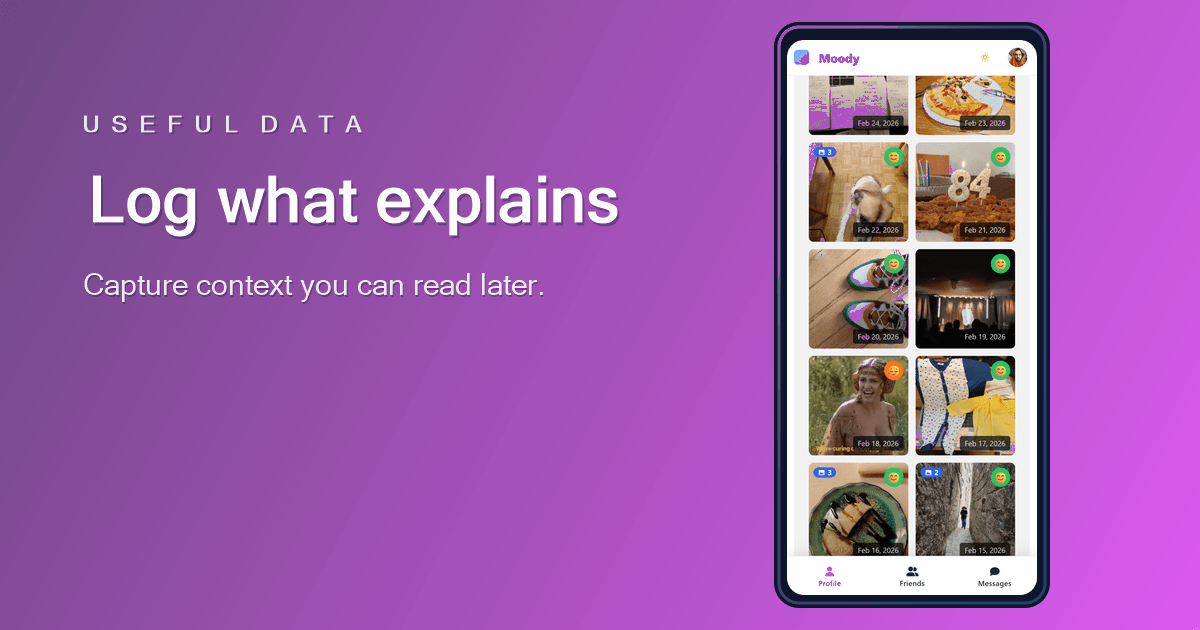
That reason can be a short note, an activity, an emotion, a stress level, sleep context, a photo, or weather. The goal is to leave enough evidence for your future self without turning every day into a report.
- Mood: the emotional signal.
- Context: what was happening around the signal.
- Memory: a note or photo that makes the day recognizable.
Log context that can explain change
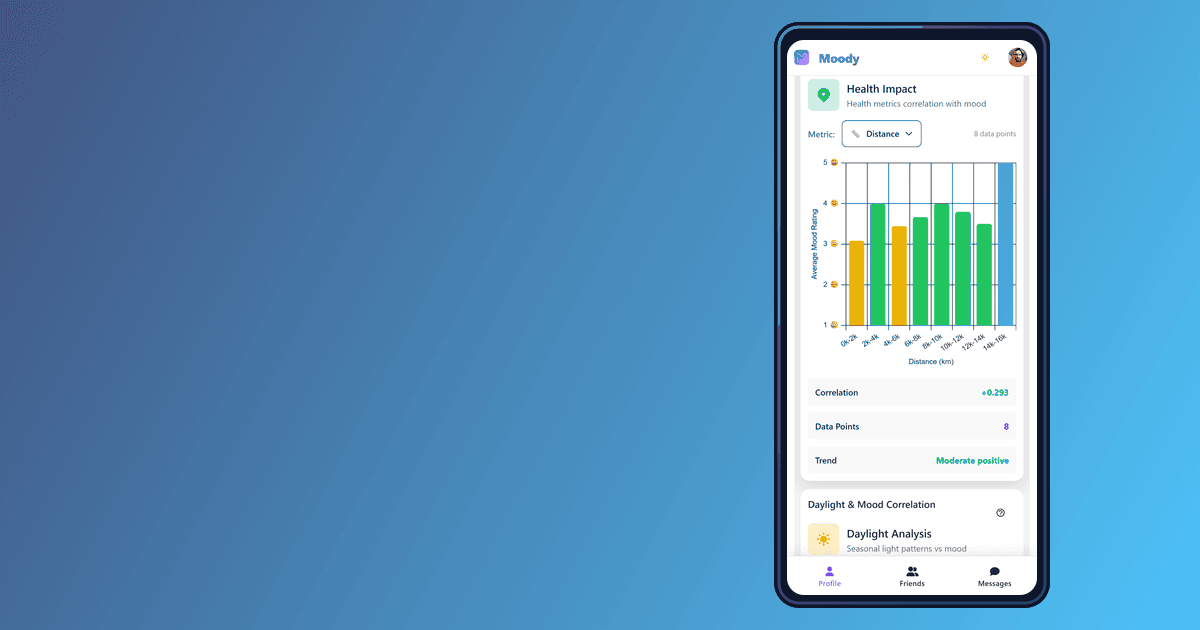
The most useful context is the context that helps explain why mood changed. For many people, this includes sleep, stress, social time, movement, work intensity, weather, travel, food, alcohol, or screen-heavy evenings. You do not need all of these. You need the few that are likely to matter in your life.
A good way to choose fields is to ask: would I ever compare this against my mood later? If the answer is no, it may not belong in your regular setup.
Use notes for exceptions, not essays
Notes are most useful when they clarify something unusual. A long note can be valuable on an important day, but it should not be required for the tracker to work. If notes become mandatory, the habit gets harder to keep.
Try writing notes as labels: deadline, family call, poor sleep, long walk, quiet evening, argument, good focus. These are not literary, but they are reviewable. You can scan them quickly and understand the pattern.
Avoid tracking fields you cannot interpret
More data can create false confidence. If a field is vague, inconsistent, or never reviewed, it may make the tracker look richer while making the history harder to read.
Mood data is personal and imperfect. Use it as a reflection aid, not as a diagnostic system. When you review it, look for repeated context and useful questions rather than hard conclusions.
FAQ
Start a clearer mood history
Moody helps you keep mood, notes, photos, and context together without forcing every field every day.
Read other articles
How to track your mood daily with less friction
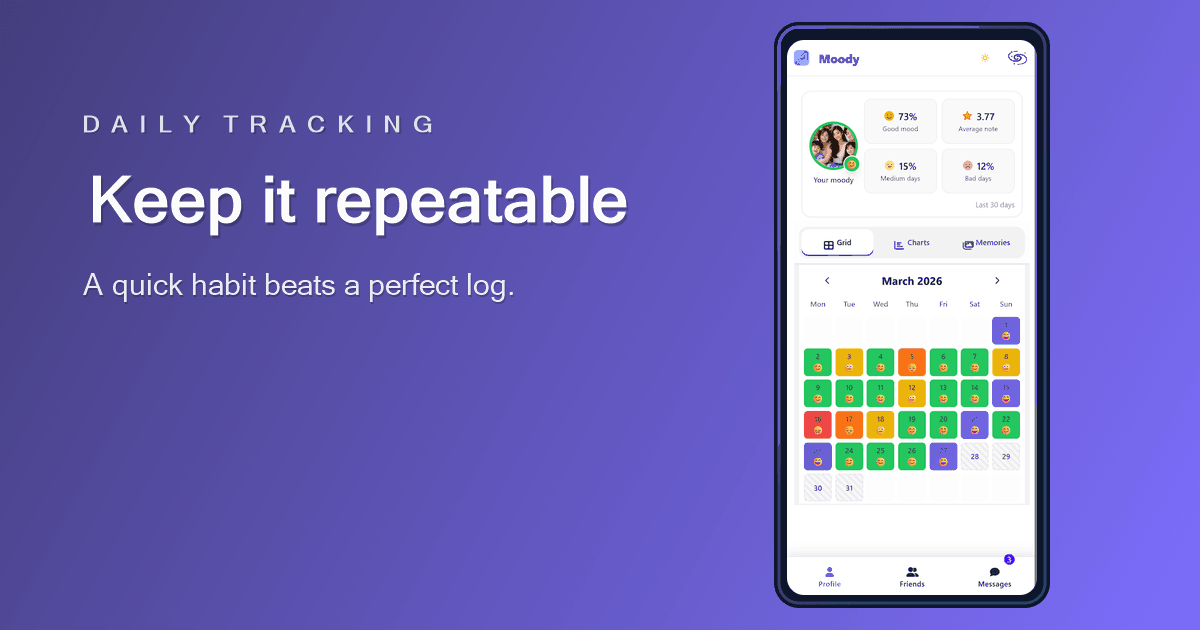
Daily mood tracking works best when the entry is small enough to repeat and clear enough to review later.
Read article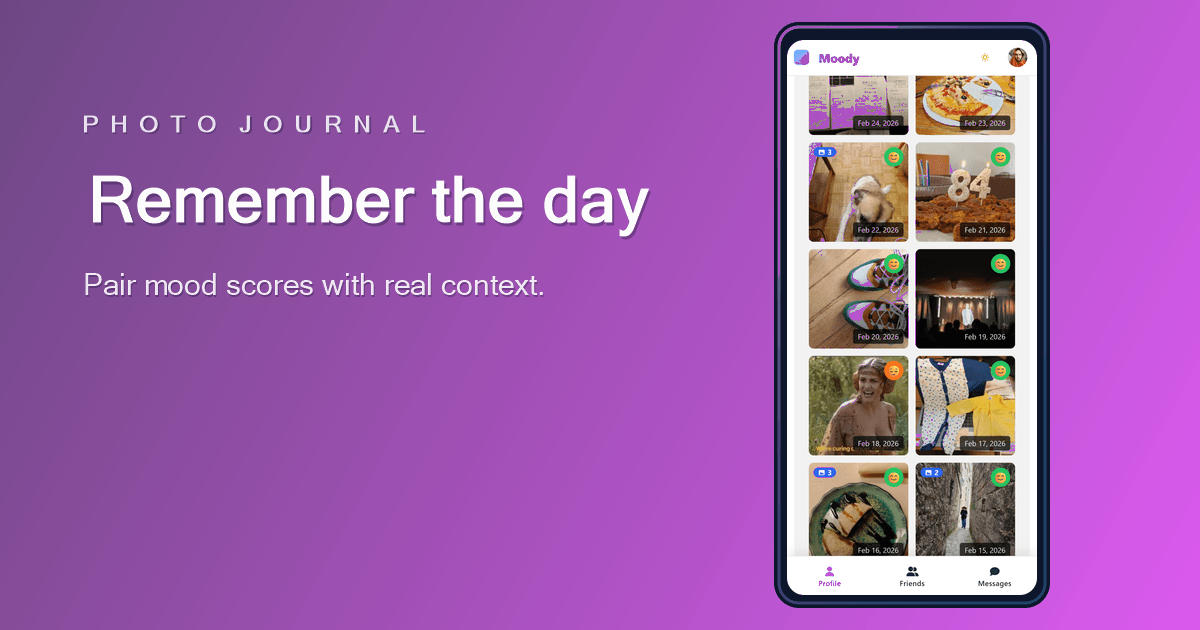
Why a mood journal with photos is more useful than a score alone
A score tells you how the day felt. A photo helps you remember what the day was actually made of.
Read article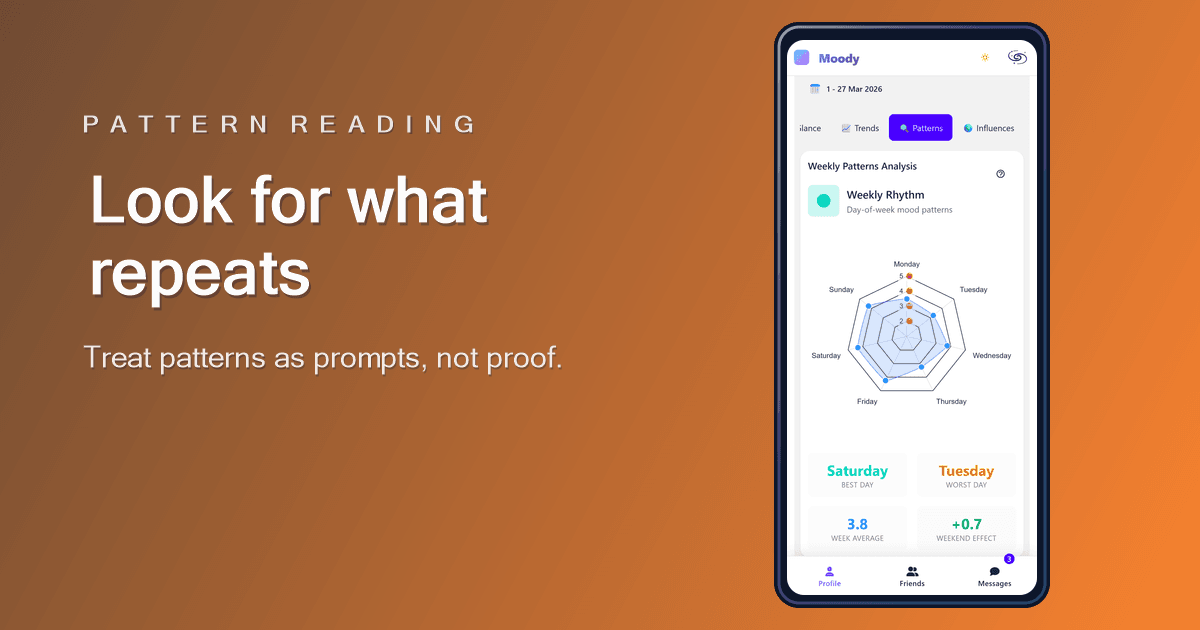
How to spot patterns in your mood data without forcing them
A real pattern repeats. A single memorable day is just a day until the history gives it context.
Read article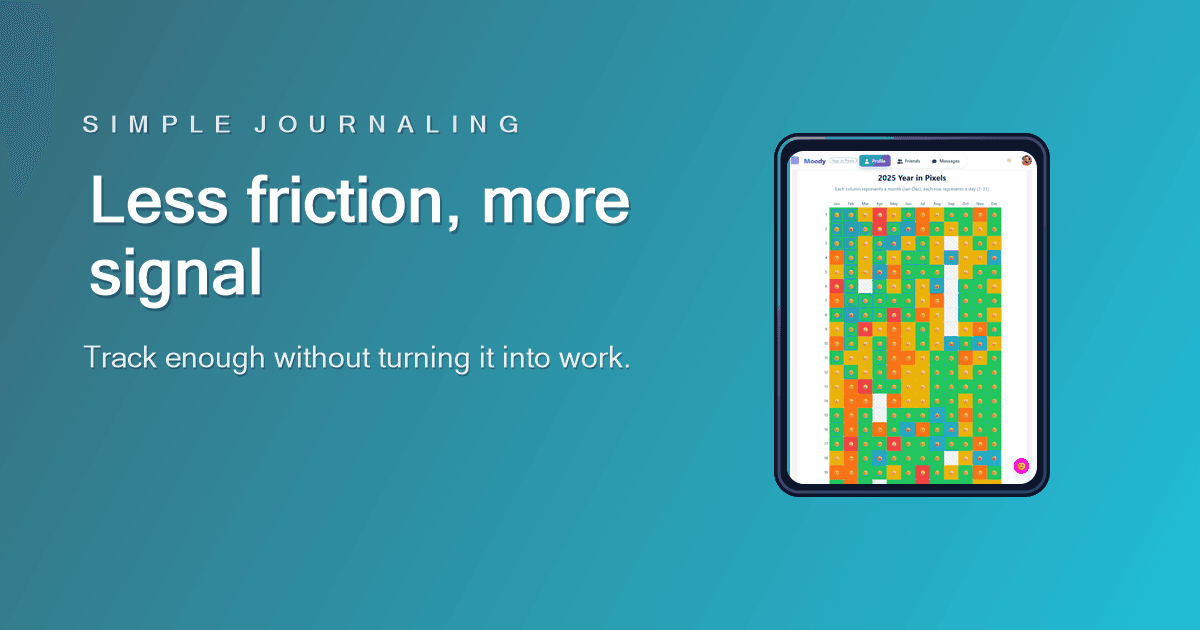
Mood tracking without overcomplicating your journal
A mood tracker should lower the effort of reflection, not create another task you feel behind on.
Read article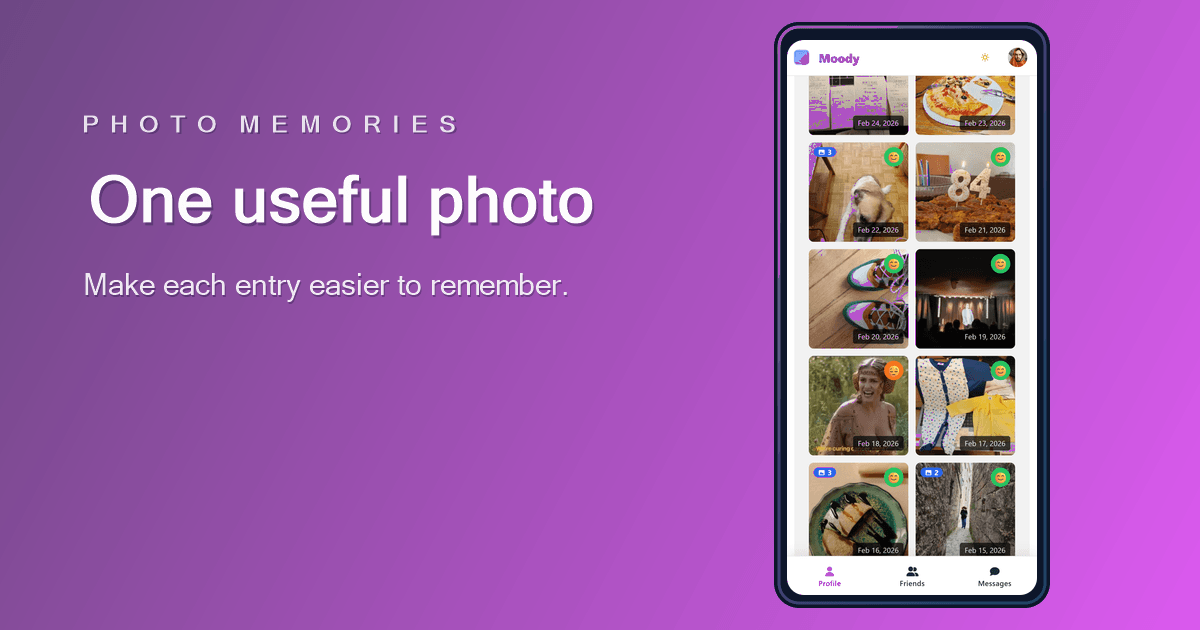
How to use photos in a mood journal without cluttering the experience
Photos work best when they explain the day, not when they turn your journal into another gallery to manage.
Read article