
Build a lightweight tracking habit
Guides for people who want a mood record that is quick to keep and still useful when they review it later.
Practical articles about daily mood tracking, photo memories, readable analytics, and optional sharing without turning self-reflection into pressure.
Focused evergreen guides about mood tracking, context, review habits, analytics, and private sharing.
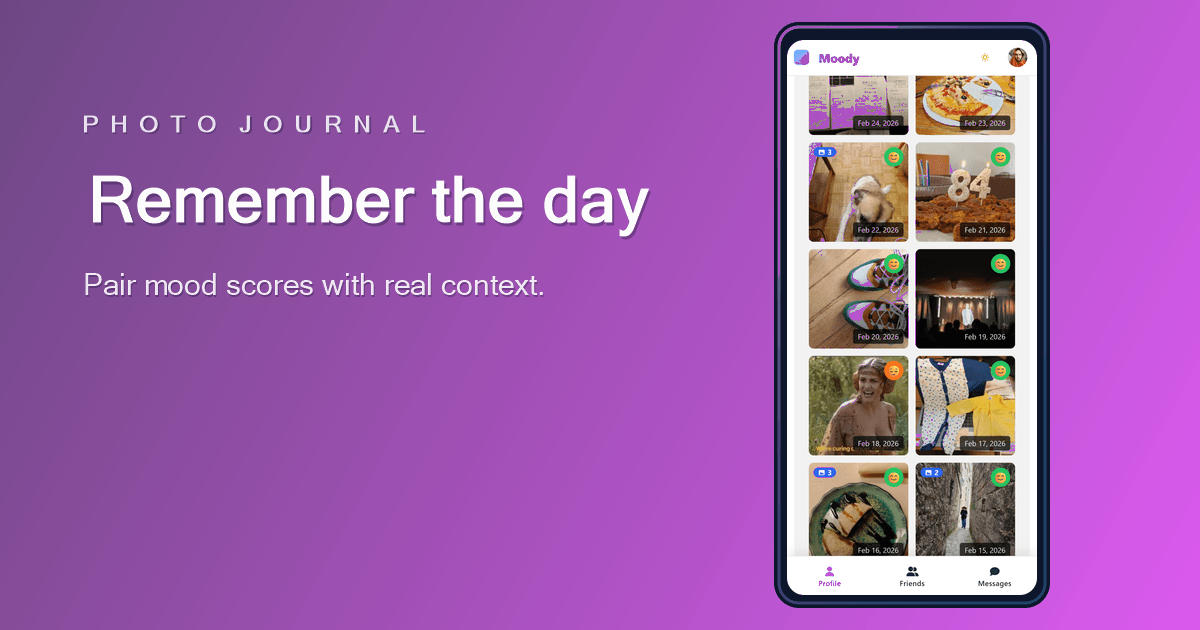
A score tells you how the day felt. A photo helps you remember what the day was actually made of.
Read article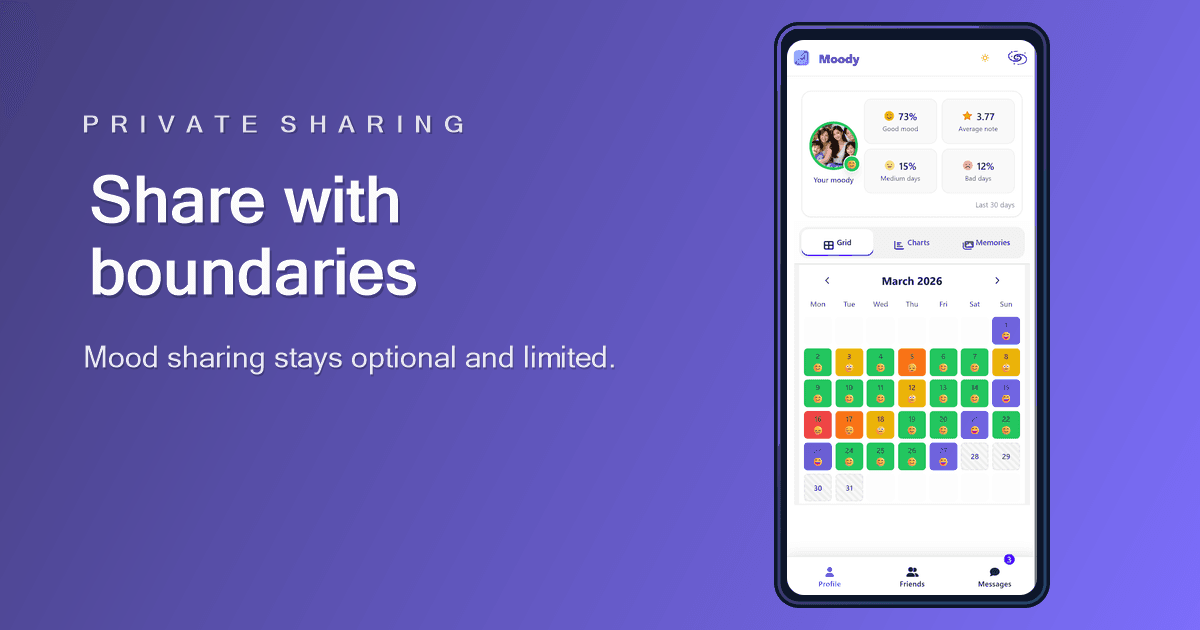
A mood tracker can support trusted connection, but privacy has to come first. Sharing should be optional, limited, and easy to understand.
Read article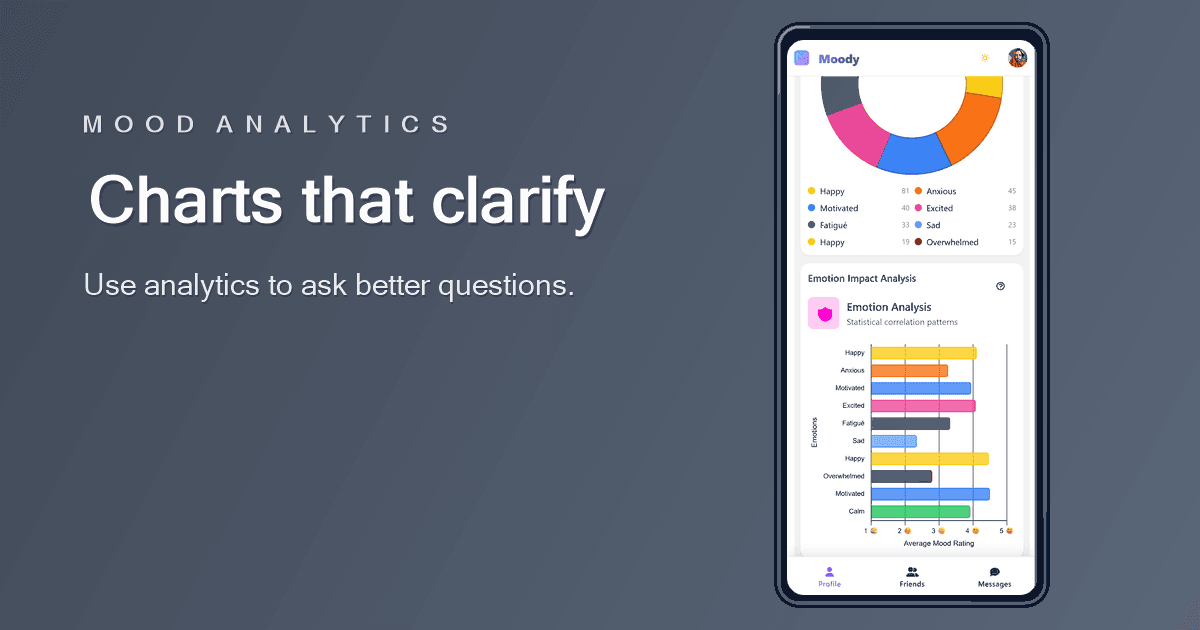
Good mood analytics do not tell you who you are. They help you ask better questions about your recent days.
Read article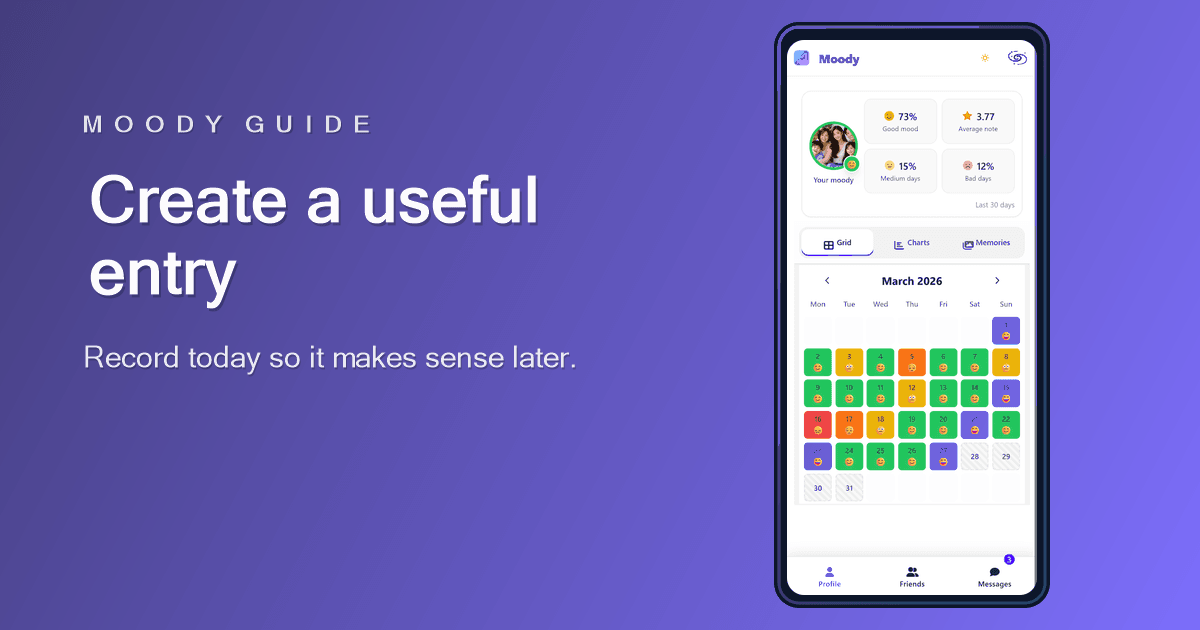
A good Moody entry is quick to create today and easy to understand when you review it later.
Read article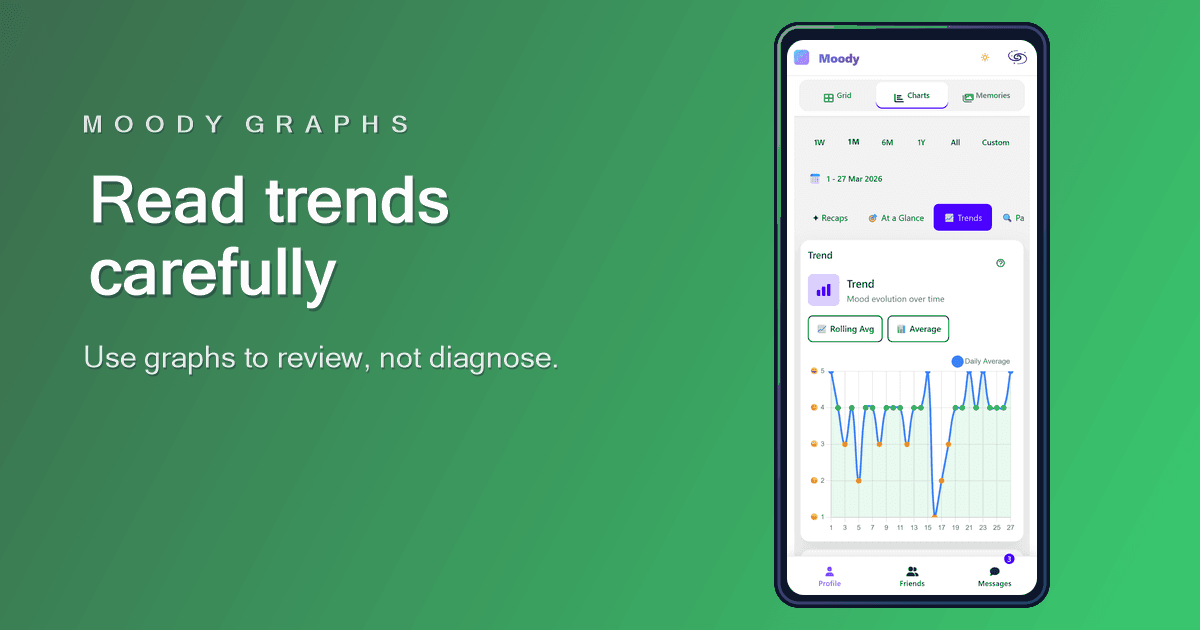
Moody graphs are designed to make your history easier to review, not to turn your mood into a scorecard.
Read article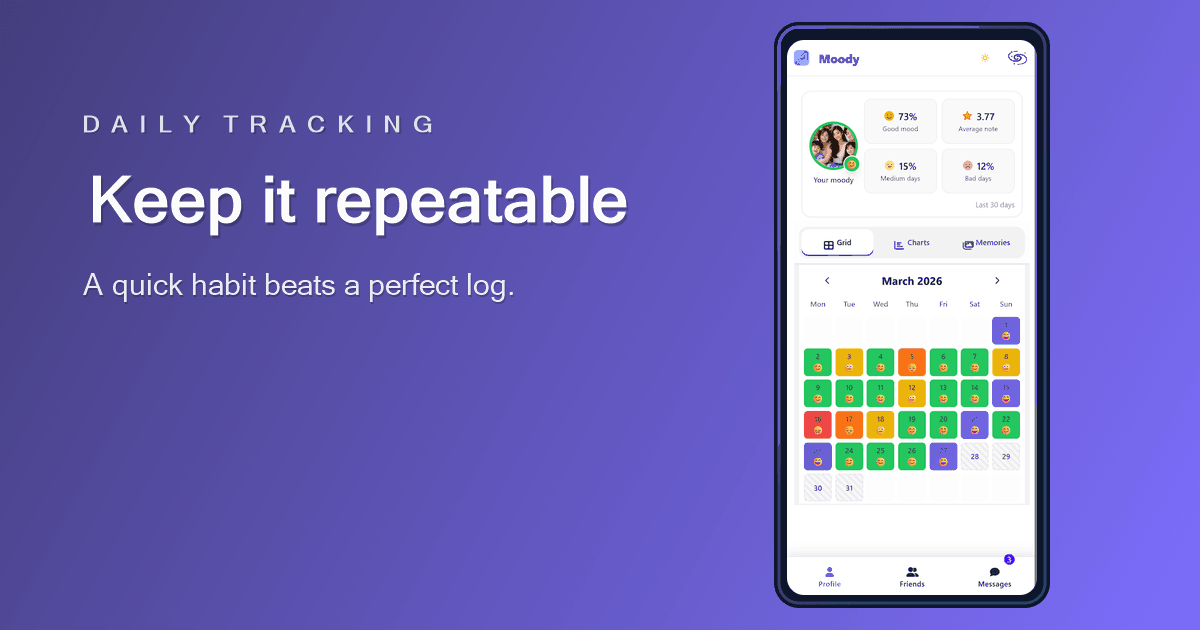
Daily mood tracking works best when the entry is small enough to repeat and clear enough to review later.
Read article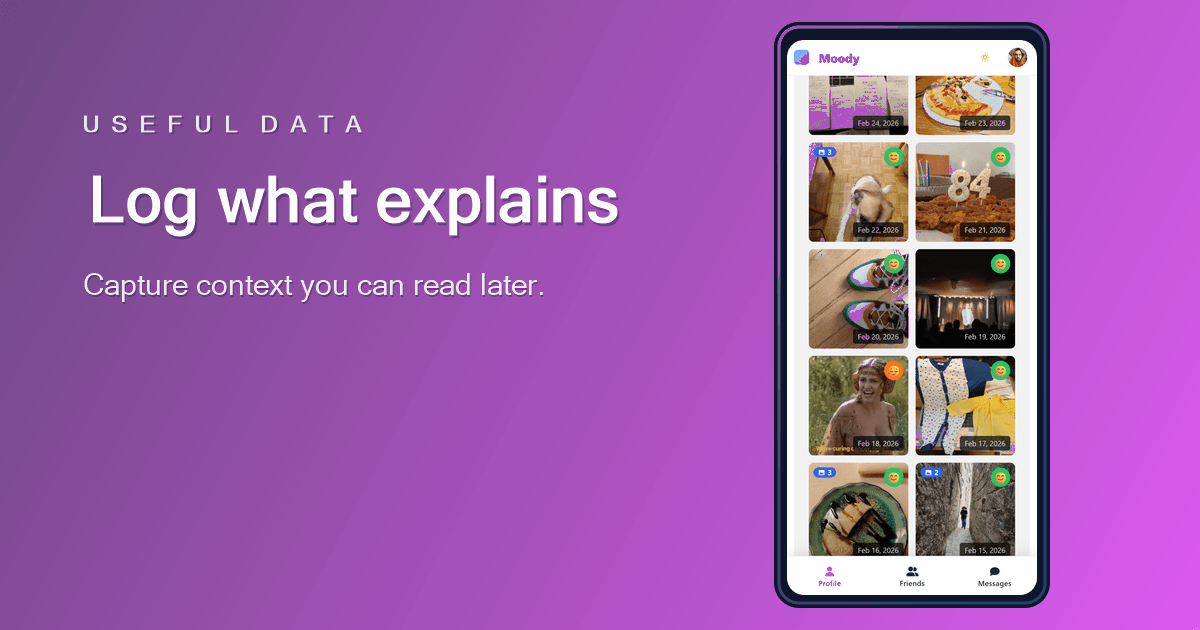
The best mood tracker data is not the most detailed data. It is the data you can understand when you review it later.
Read article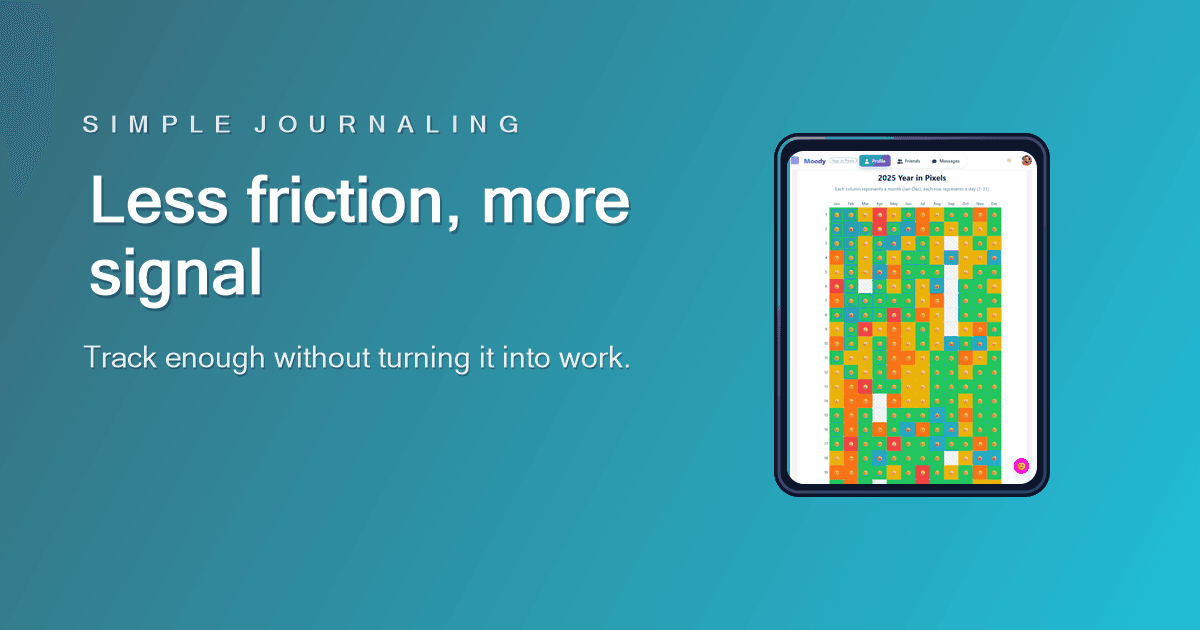
A mood tracker should lower the effort of reflection, not create another task you feel behind on.
Read article
A weekly review should help you understand the shape of the week, not turn your mood history into a performance report.
Read article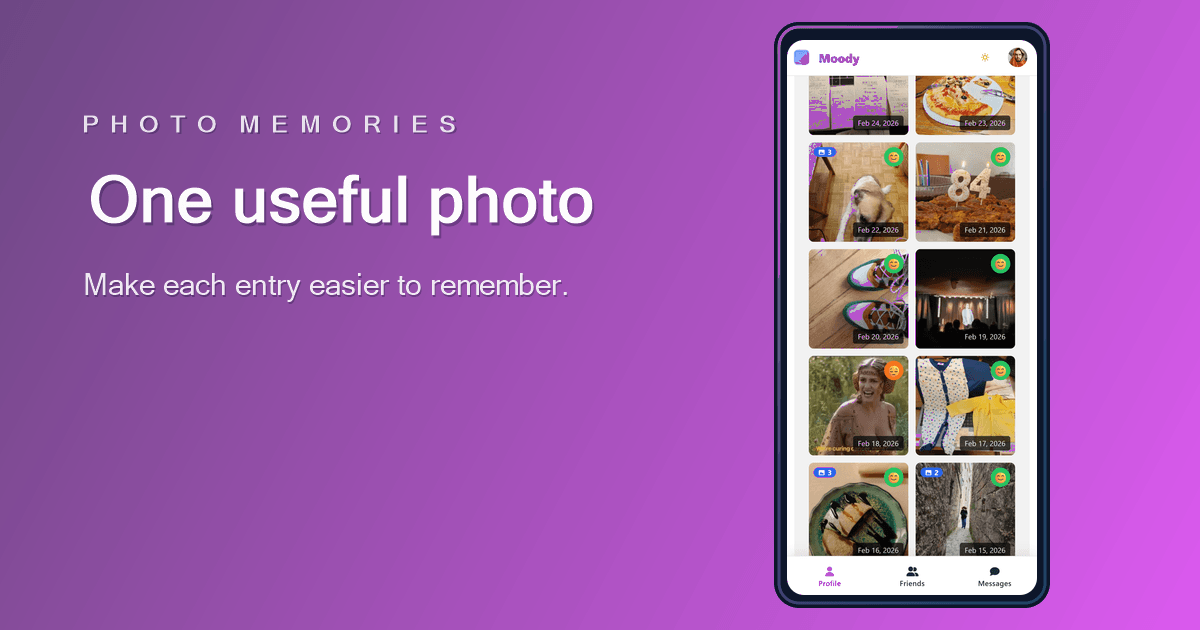
Photos work best when they explain the day, not when they turn your journal into another gallery to manage.
Read articleA small set of practical walkthroughs for the Moody features that benefit from product-specific guidance.
The blog keeps product tutorials selective so the main article library can stay focused and useful.
Guide A good Moody entry is quick to create today and easy to understand when you review it later.
Read tutorial Guide Moody graphs are designed to make your history easier to review, not to turn your mood into a scorecard.
Read tutorialThe article library is organized around lightweight tracking, useful context, careful analytics, and optional private sharing.
Guides for people who want a mood record that is quick to keep and still useful when they review it later.

Practical articles about notes, photos, activities, and small details that make a mood history easier to understand.

Content about trends, weekly review, and pattern reading without treating personal mood data like diagnosis.

Privacy-first guidance for optional mood sharing with trusted people, without public-feed pressure.
The Moody blog is intentionally small: fewer articles, stronger topic clusters, clearer internal links, and content written for people who want a useful private mood history.