How to track your mood daily with less friction
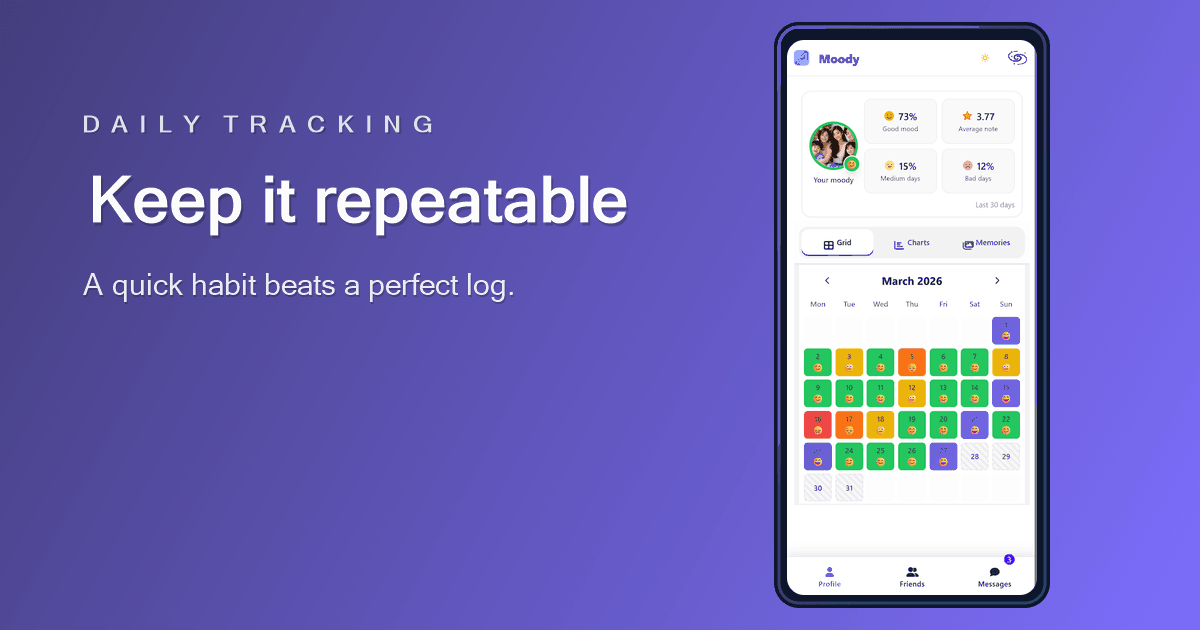
Daily mood tracking works best when the entry is small enough to repeat and clear enough to review later.
Quick answer
People searching for daily mood tracking usually want a habit that is easy to repeat and does not become another demanding task.
Make the daily entry deliberately small
The main reason mood tracking fails is not lack of motivation. It is friction. If every entry asks for a long explanation, a perfect note, multiple tags, and a careful reflection, the habit becomes too expensive for normal days.
A sustainable daily entry should answer one simple question first: how did today feel overall? After that, add only the context that will help you understand the entry later. That may be a note, a photo, activities, stress, sleep, or weather. It does not need to be all of them every day.
- Start with the mood rating.
- Add one or two context fields only when they matter.
- Accept incomplete entries instead of breaking the habit.
Use the same time window most days
Consistency improves the quality of your record. If you log once in the morning, once at lunch, and once at midnight depending on the day, the entries may start measuring different things. A daily mood tracker becomes easier to read when the timing is stable.
That does not mean you need a rigid ritual. It means choosing a realistic moment: after dinner, before sleep, after work, or during a short evening check-in. The best time is the one that fits the life you already have.

Track what you can review later
Good mood tracking is not about collecting every possible detail. It is about collecting details you can use later. If you never look at a field, it probably does not deserve space in your routine.
A useful entry usually contains a mood score, a short reason, and one piece of context. For example: low mood, poor sleep, long commute. Or good mood, walk outside, dinner with friends. These small combinations are easier to scan than long paragraphs.
Review lightly instead of judging every day
Daily tracking is not a daily performance review. Some days will be messy, incomplete, or hard to label. That is normal. The value comes from the history, not from making every entry perfect.
Use daily entries to build a record, then review weekly or monthly for patterns. This keeps the daily habit quick and gives the analysis a better sample than one isolated day.
FAQ
Start a clearer mood history
Moody is built for quick daily entries that stay useful when you look back later.
Read other articles

What to log in a mood tracker so the data becomes useful
The best mood tracker data is not the most detailed data. It is the data you can understand when you review it later.
Read article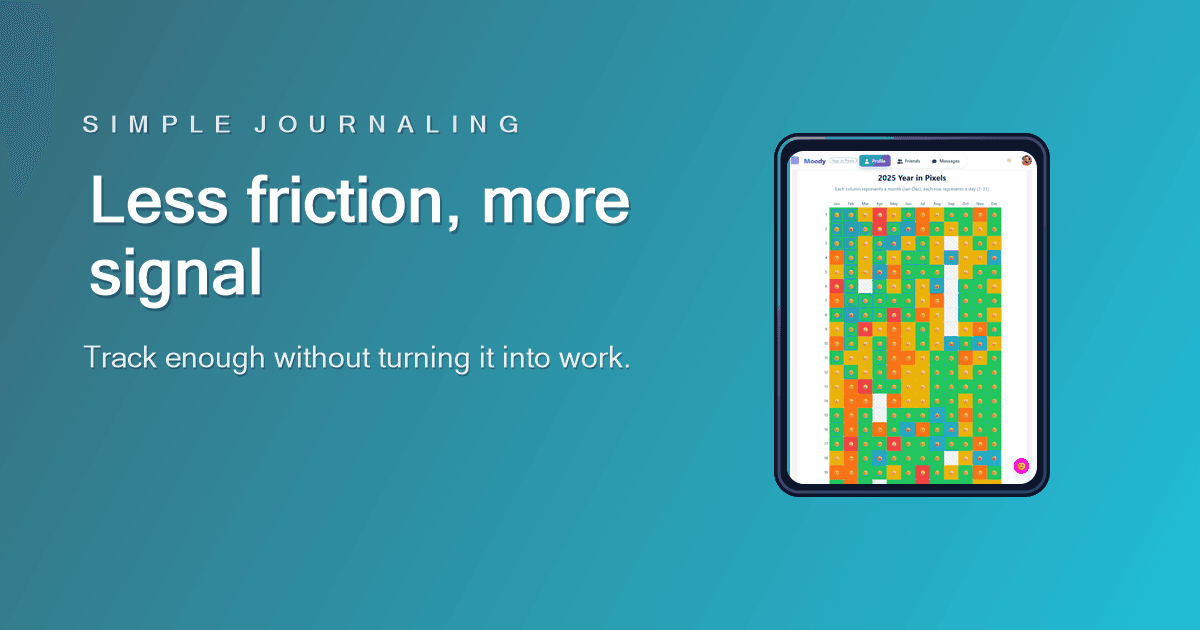
Mood tracking without overcomplicating your journal
A mood tracker should lower the effort of reflection, not create another task you feel behind on.
Read article
How to review your week with a mood tracker in 10 minutes
A weekly review should help you understand the shape of the week, not turn your mood history into a performance report.
Read article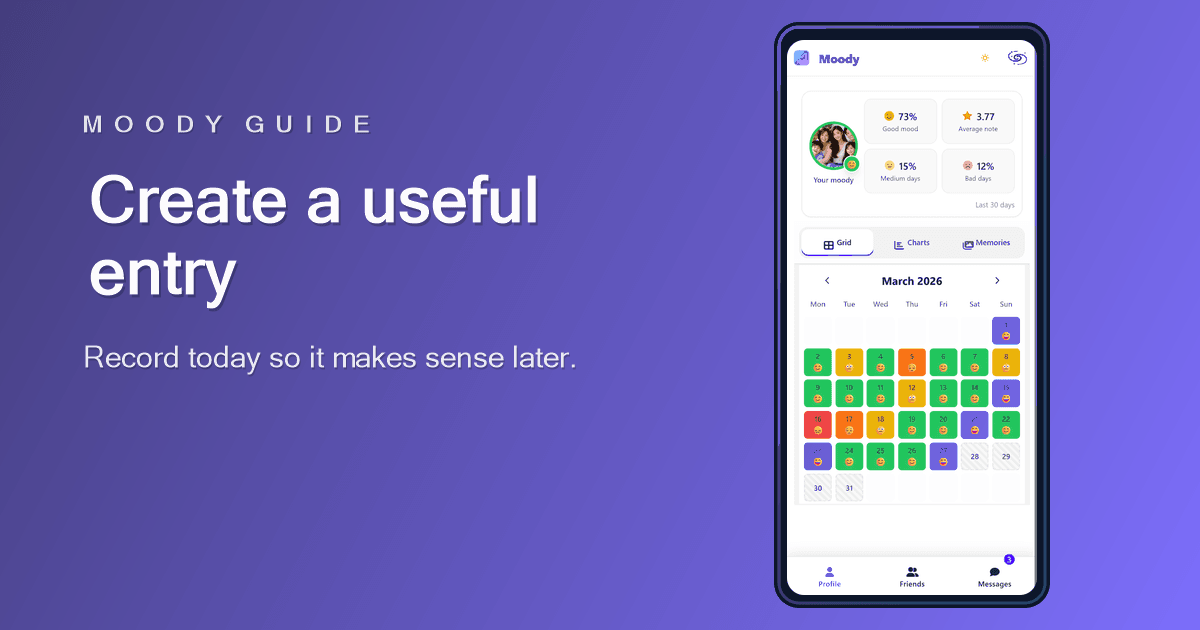
Create a Moody entry that stays useful later
A good Moody entry is quick to create today and easy to understand when you review it later.
Read article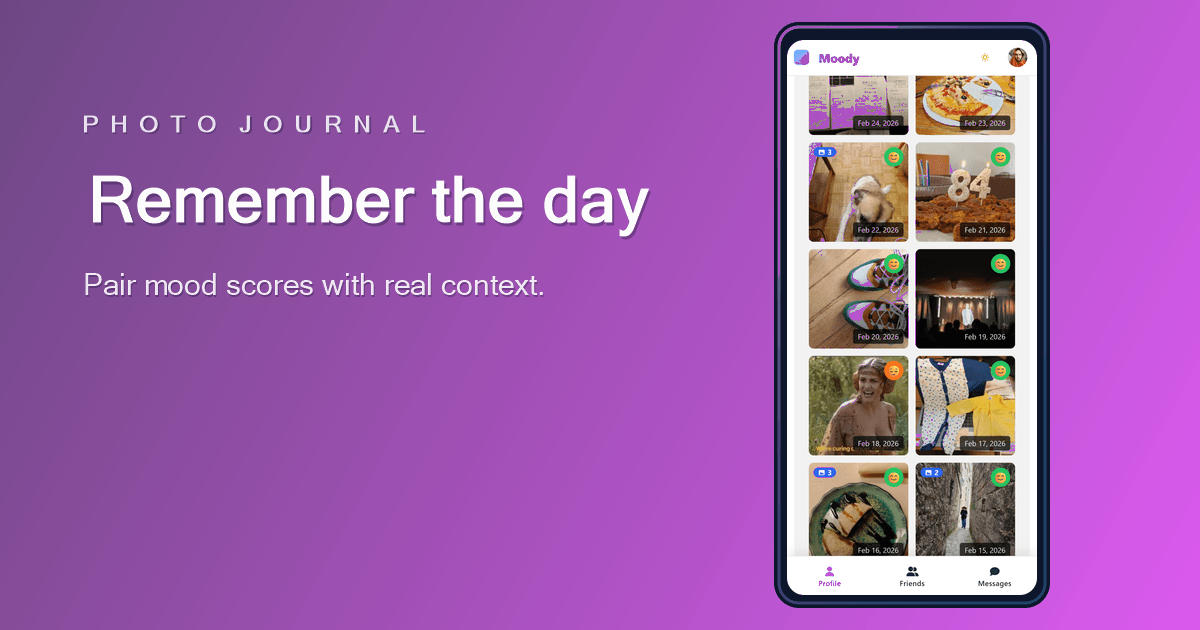
Why a mood journal with photos is more useful than a score alone
A score tells you how the day felt. A photo helps you remember what the day was actually made of.
Read article
How to use photos in a mood journal without cluttering the experience
Photos work best when they explain the day, not when they turn your journal into another gallery to manage.
Read article