Create a Moody entry that stays useful later
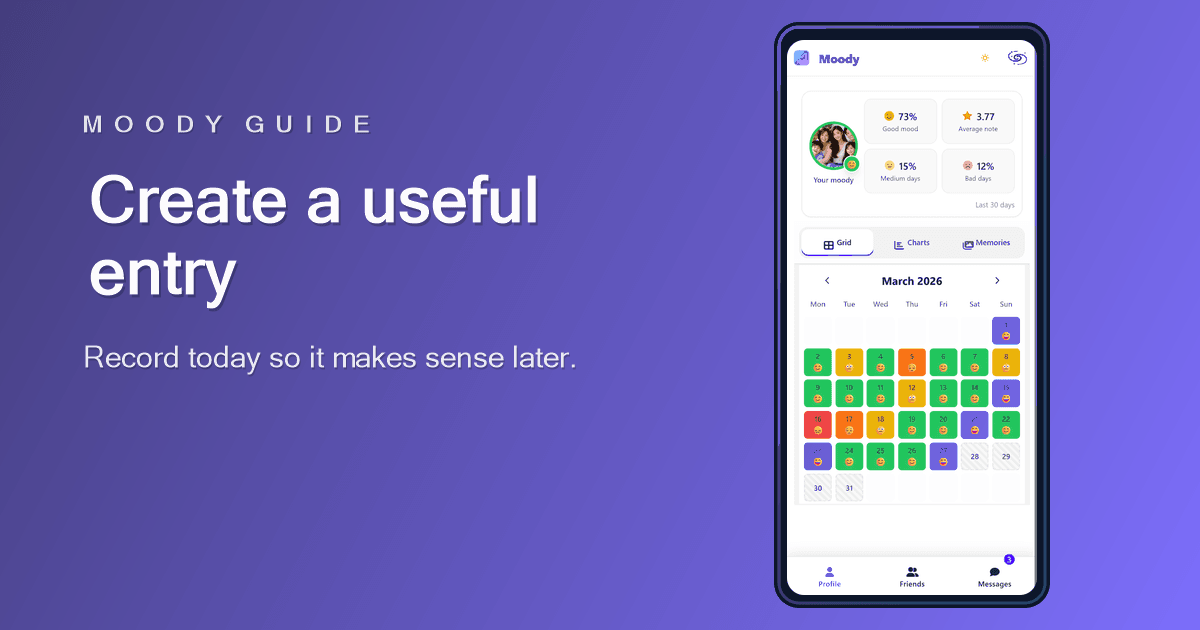
A good Moody entry is quick to create today and easy to understand when you review it later.
Quick answer
New Moody users need a practical walkthrough that explains what to capture in an entry and why each field exists.
Start with the mood rating
The mood rating is the anchor of a Moody entry. Choose the option that best represents the day overall. It does not need to capture every emotional change from morning to night.
If the day was mixed, choose the rating that feels most representative and use context to explain the nuance. This keeps the entry fast while still preserving meaning.
Add context only where it helps
The context fields exist to make the entry readable later. Photos, notes, activities, emotions, stress, location, or weather can all help, but not every entry needs every field.
A useful entry often needs only one extra clue. For example: low mood plus poor sleep, good mood plus dinner with friends, average mood plus long commute.
Use photos and notes for memory
A photo can make the day recognizable. A short note can explain what the photo cannot. You do not need to write a full journal entry unless the day deserves one.
For many entries, one sentence is enough: "quiet day after poor sleep", "walk helped", "busy but good dinner", or "stressful deadline".
Save the entry and let the history build
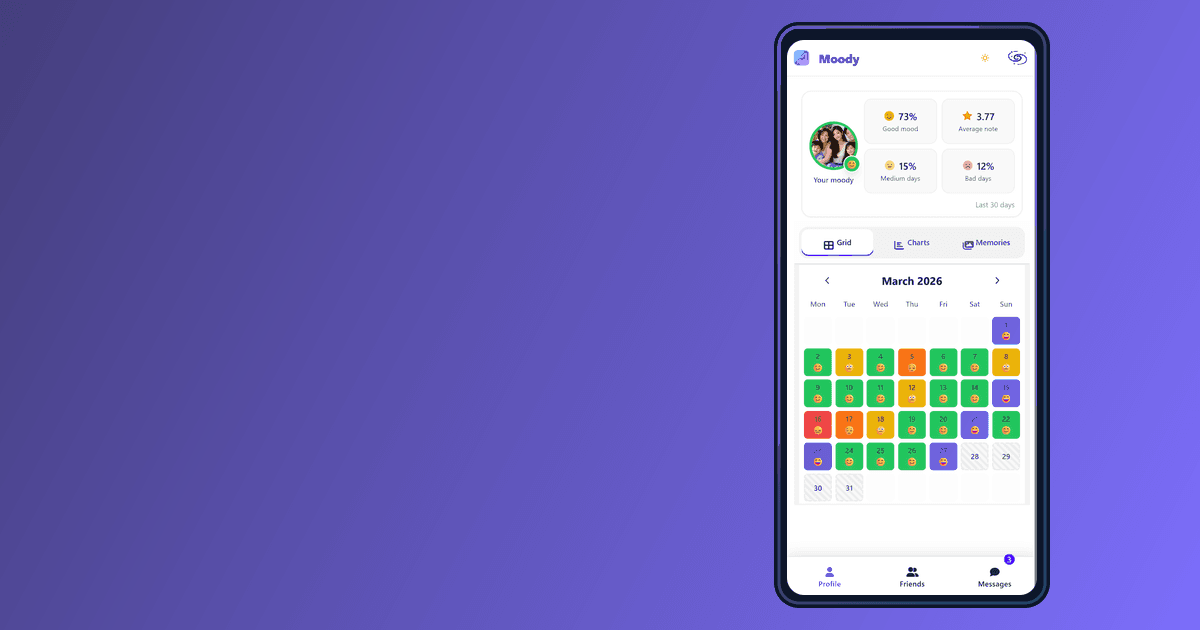
One entry is a snapshot. Many entries become a timeline. Moody is most useful when you can review days side by side, see the year in pixels, and connect charts back to real memories.
Do not worry about making the entry perfect. A usable entry that exists is better than an ideal entry you never finish.
FAQ
Start a clearer mood history
Open Moody and create a small entry that you can actually understand later.
Read other articles
How to track your mood daily with less friction
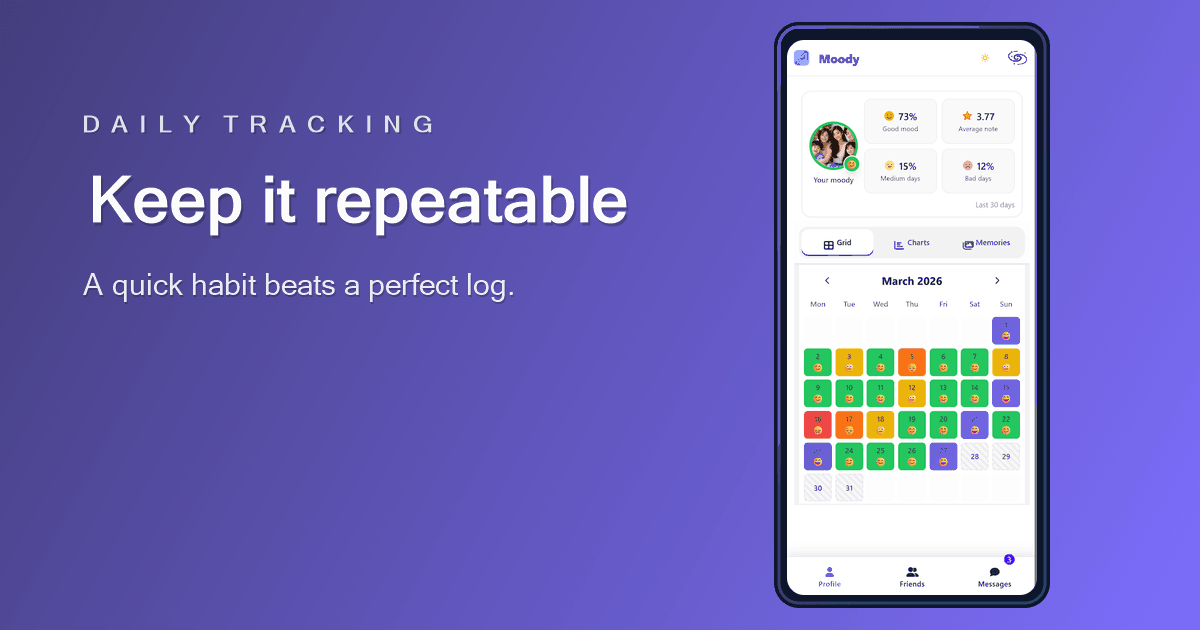
Daily mood tracking works best when the entry is small enough to repeat and clear enough to review later.
Read article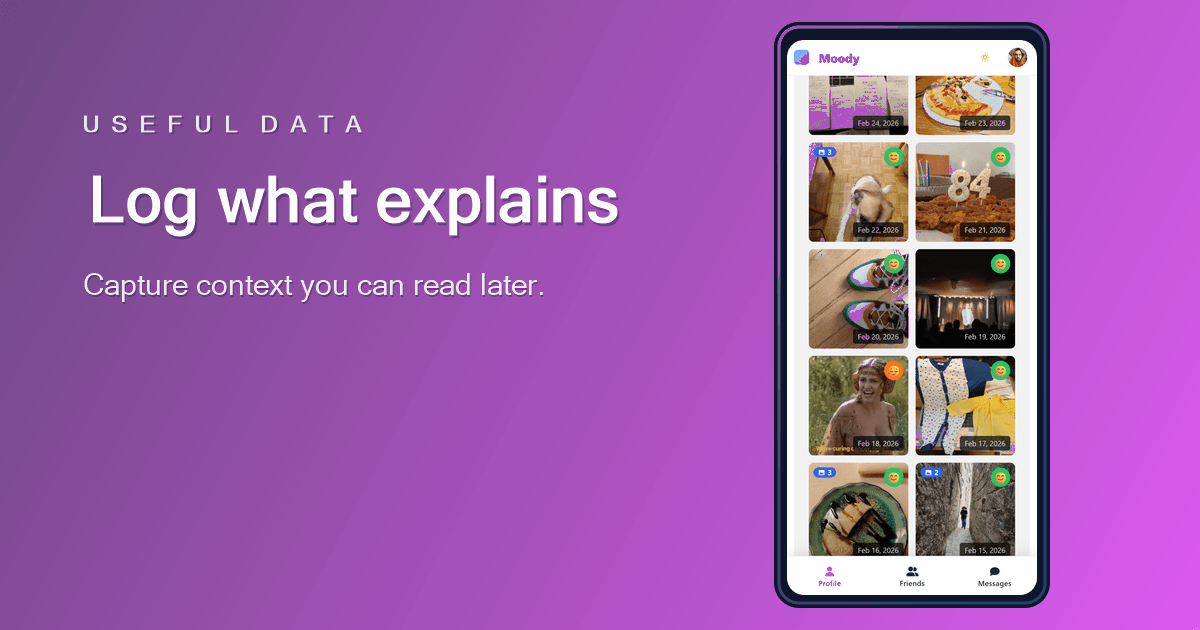
What to log in a mood tracker so the data becomes useful
The best mood tracker data is not the most detailed data. It is the data you can understand when you review it later.
Read article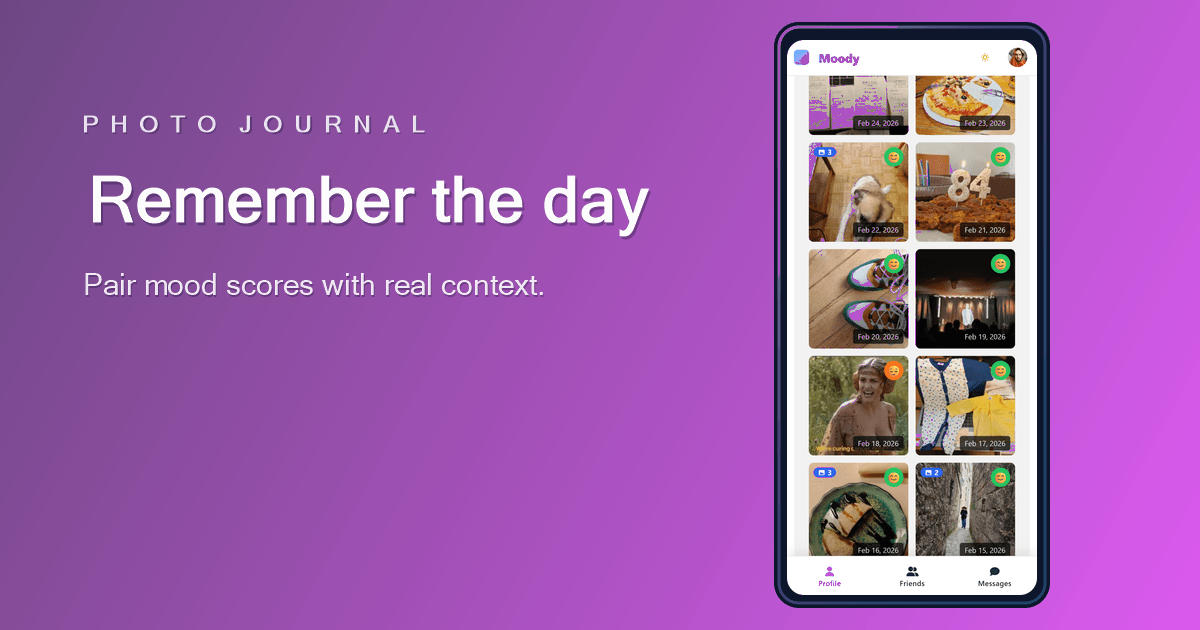
Why a mood journal with photos is more useful than a score alone
A score tells you how the day felt. A photo helps you remember what the day was actually made of.
Read article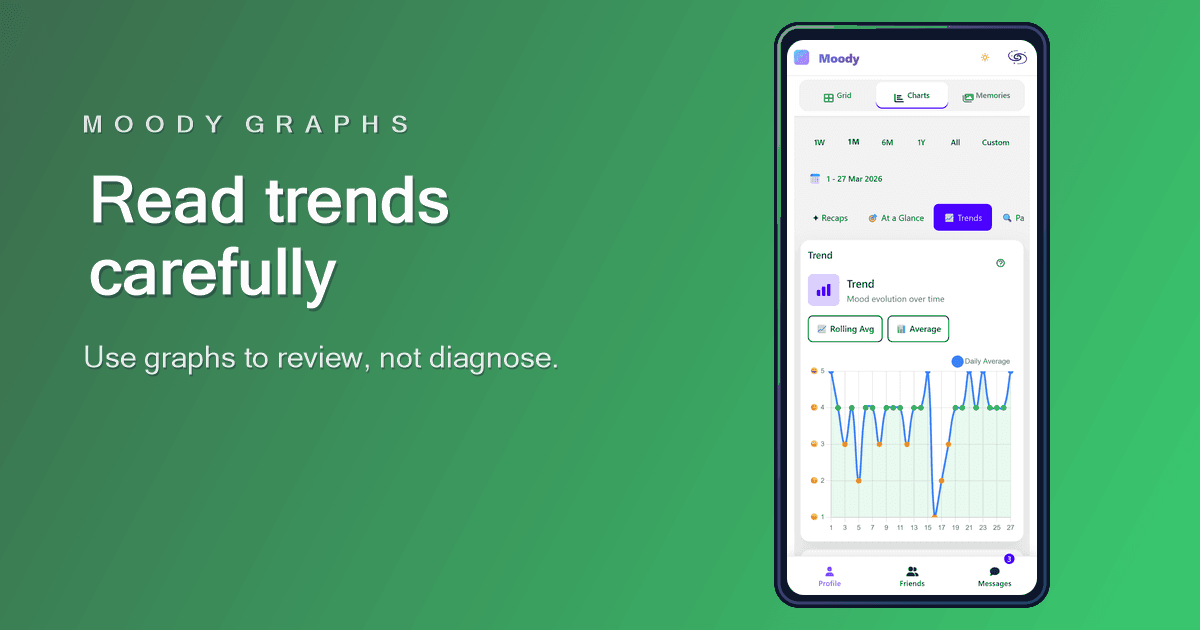
How to use the Moody graphs without overreading your data
Moody graphs are designed to make your history easier to review, not to turn your mood into a scorecard.
Read article