How to review your week with a mood tracker in 10 minutes
A weekly review should help you understand the shape of the week, not turn your mood history into a performance report.

Quick answer
People searching for weekly mood review want a practical process for reading recent entries without overanalyzing them.
Start with the shape of the week
Before reading notes or looking for reasons, scan the week as a whole. How many days were steady, low, high, mixed, or missing? This gives you a first impression without forcing explanations too early.
The shape matters because daily mood can be noisy. One difficult day may stand out emotionally, but the week may still have been mostly stable. Or the opposite may be true: no single day felt dramatic, but the whole week trended lower than usual.
Look for context before conclusions
After the first scan, look at the context around the entries. Notes, activities, photos, stress, sleep, weather, and social time can help explain why the week felt the way it did. The goal is not to prove a cause. The goal is to notice what deserves attention.
A useful weekly review uses language like "this might matter" or "this is worth watching" instead of "this definitely caused that." Mood data is personal and imperfect, so it works best as a reflection tool.

Ask three practical questions
A short review becomes easier when you use the same questions each week. First: what gave the week energy? Second: what drained it? Third: what would I repeat, avoid, or adjust next week?
These questions keep the review useful. You are not trying to explain your whole emotional life. You are looking for one or two practical takeaways from the record you already kept.
- What helped this week?
- What made the week heavier?
- What small adjustment is realistic next week?
Do not turn review into diagnosis
A mood tracker can help you notice patterns, but it cannot diagnose you. It can show that certain weeks were harder, that sleep and mood often moved together, or that social time changed how days felt. Those observations may be useful, but they are not medical conclusions.
If your entries raise concerns about your wellbeing, use them as notes for a conversation with a qualified professional or trusted support. Moody itself is for journaling and self-reflection.
FAQ
Start a clearer mood history
Moody gives you a readable history so weekly review can stay quick, calm, and useful.
Read other articles
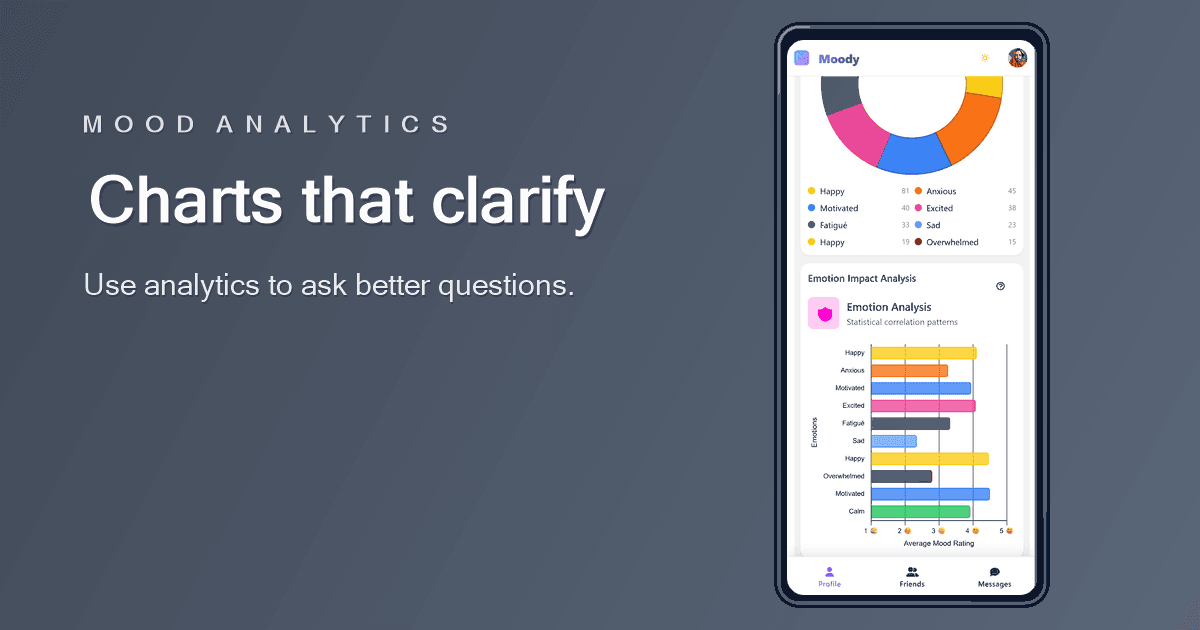
What a mood tracker with analytics should actually help you understand
Good mood analytics do not tell you who you are. They help you ask better questions about your recent days.
Read article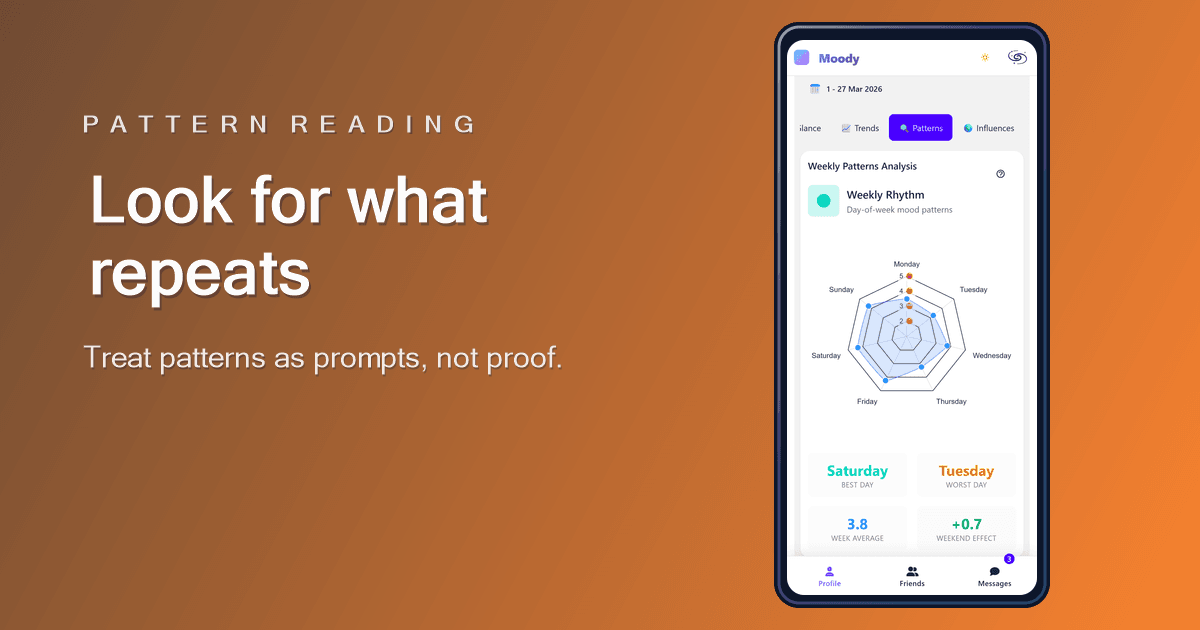
How to spot patterns in your mood data without forcing them
A real pattern repeats. A single memorable day is just a day until the history gives it context.
Read article
How to track your mood daily with less friction
Daily mood tracking works best when the entry is small enough to repeat and clear enough to review later.
Read article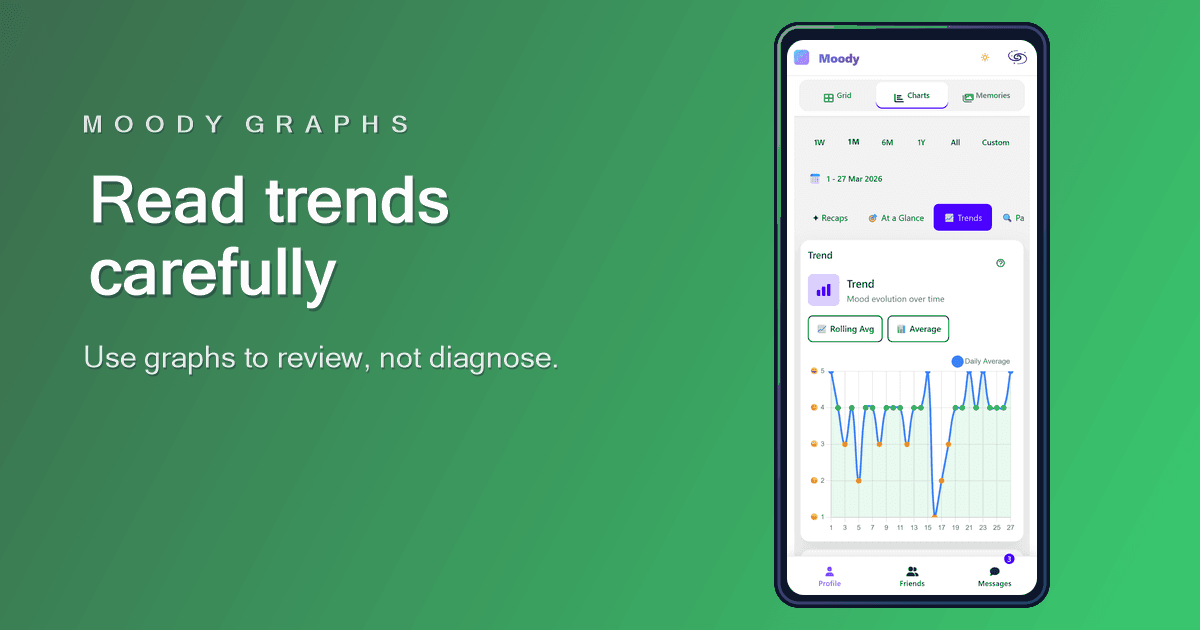
How to use the Moody graphs without overreading your data
Moody graphs are designed to make your history easier to review, not to turn your mood into a scorecard.
Read article