How to spot patterns in your mood data without forcing them
A real pattern repeats. A single memorable day is just a day until the history gives it context.
Quick answer
People want to know how to read mood patterns without forcing meaning into every chart or every bad day.
Look for repetition, not drama
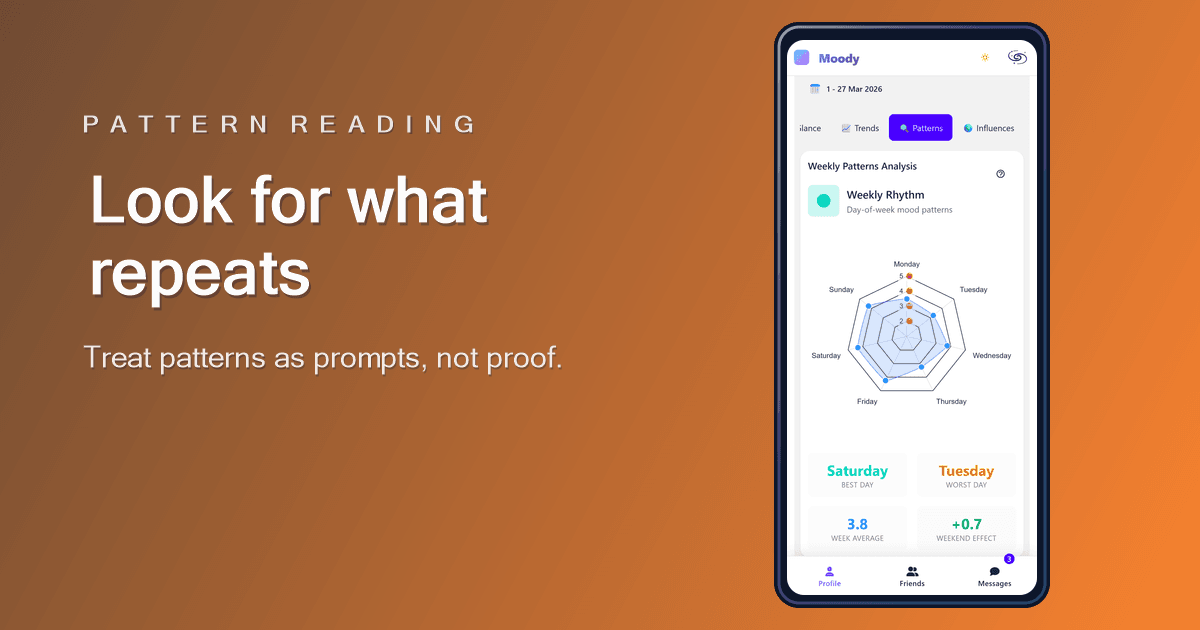
The most emotional entry is not always the most important pattern. A difficult day may be memorable because it felt intense. A pattern is different: it repeats across several days, weeks, or similar contexts.
When you review mood data, start by looking for repetition. Do low days cluster after short sleep? Do better days often include movement or social time? Do certain weekdays feel heavier? The repetition is what makes the question worth exploring.
Compare similar periods
Mood data is easier to interpret when you compare similar periods. A weekday to a weekday, a work week to another work week, or one month to the previous month can be more useful than comparing a holiday week to a deadline week.
This does not make the result scientific. It simply reduces noise. Better comparisons make the review more fair.

Use context to test the pattern
Once you notice a possible pattern, go back to the entries behind it. The chart may show that several days were low, but the notes and photos may explain whether they had anything in common.
This step protects you from overreading. Without context, it is easy to invent explanations. With context, you can form a better question: is this related to sleep, workload, isolation, weather, travel, or something else?
Treat patterns as prompts
A mood pattern is a prompt for reflection, not a final answer. If the same signal keeps returning, you can decide whether to change a small routine, watch it for another week, or bring the history into a conversation with a professional.
The safest way to use mood data is to stay curious and specific. Notice what repeats, keep the language careful, and choose one realistic next step.
FAQ
Start a clearer mood history
Moody helps you move from isolated entries to readable patterns without turning your data into a diagnosis.
Read other articles
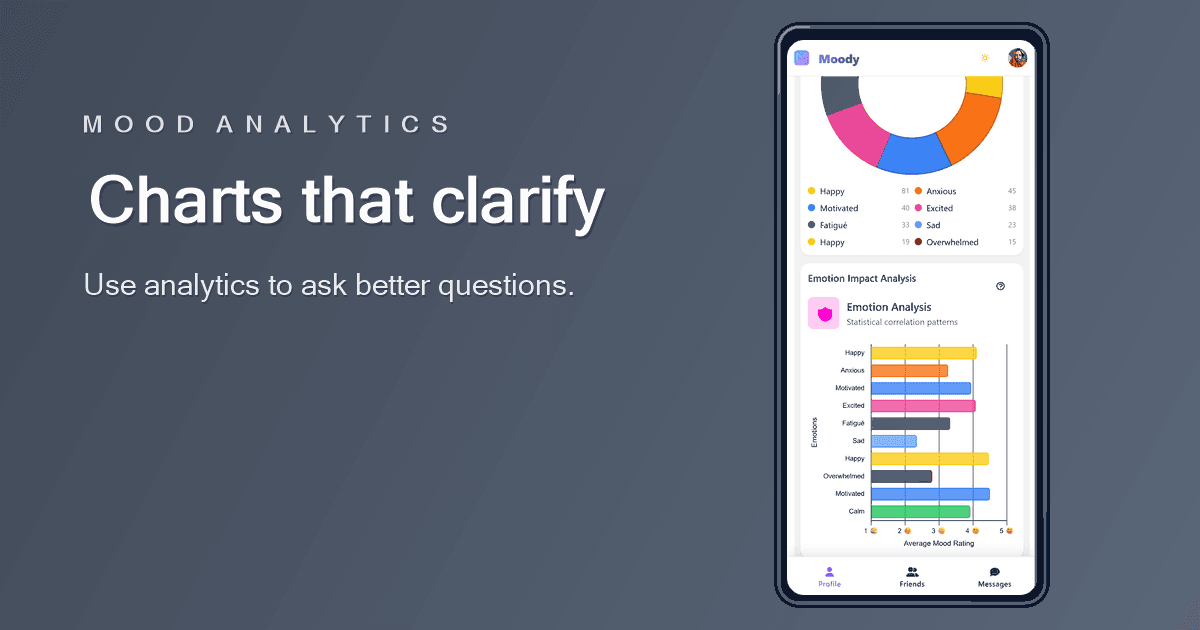
What a mood tracker with analytics should actually help you understand
Good mood analytics do not tell you who you are. They help you ask better questions about your recent days.
Read article
How to review your week with a mood tracker in 10 minutes
A weekly review should help you understand the shape of the week, not turn your mood history into a performance report.
Read article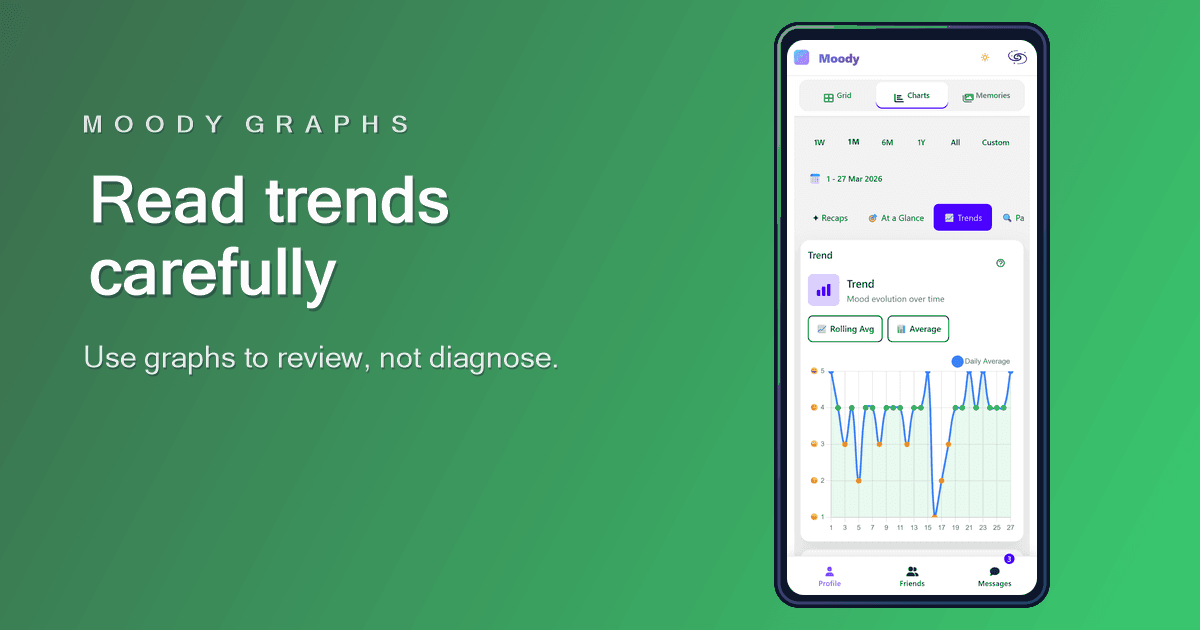
How to use the Moody graphs without overreading your data
Moody graphs are designed to make your history easier to review, not to turn your mood into a scorecard.
Read article
What to log in a mood tracker so the data becomes useful
The best mood tracker data is not the most detailed data. It is the data you can understand when you review it later.
Read article