Why a mood journal with photos is more useful than a score alone
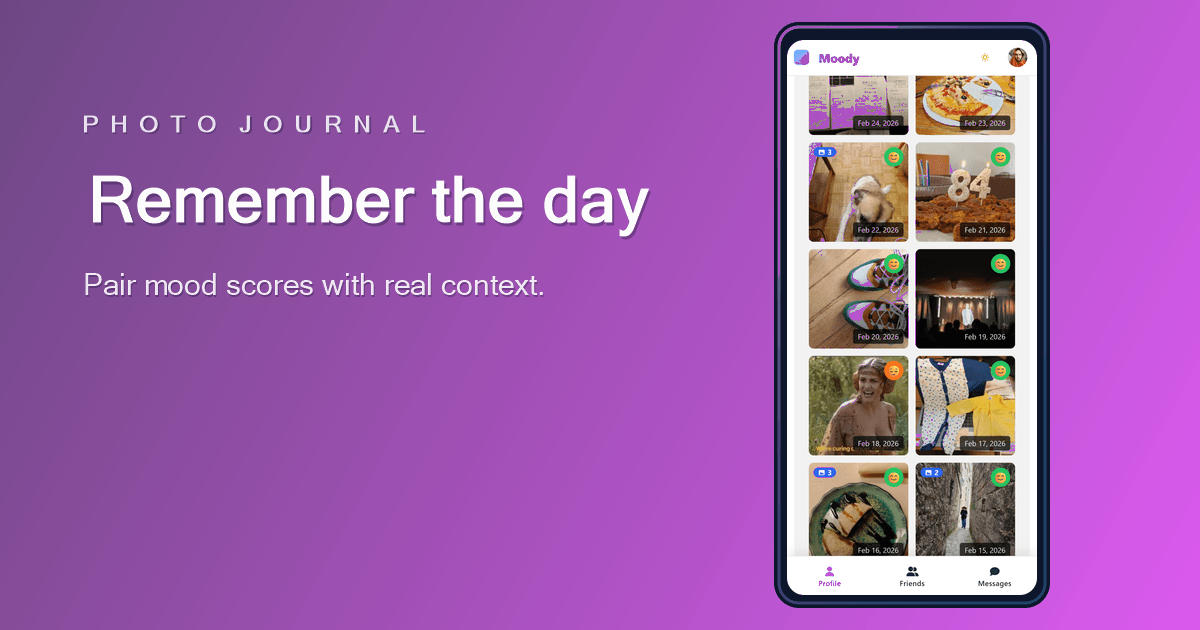
A score tells you how the day felt. A photo helps you remember what the day was actually made of.
Quick answer
People looking for a mood journal with photos usually want a record that feels easier to remember than a number-only tracker.
A mood score needs context to stay useful
Mood scores are useful because they are quick. They let you keep a daily rhythm without writing a long journal entry every night. The tradeoff is that a score can become abstract after a few weeks. You may see that a day was low, high, or mixed, but not remember what made it feel that way.
Photos solve a different part of the problem. They do not replace the mood rating. They give the rating a memory anchor: the place you were, the meal you had, the desk you worked at, the walk you took, or the small moment that explains the day better than a paragraph.
- Use a mood score for the emotional signal.
- Use a photo for memory and context.
- Use a short note only when the photo does not explain enough.
The best photo is not always the best-looking photo
A useful mood journal photo is not necessarily polished. It can be a room, a train platform, a plate, a street, a weather moment, a receipt, or a quiet detail that will bring the day back later. The goal is not to build a perfect gallery. The goal is to help your future self understand the entry.
That distinction matters because a photo habit can become heavy if every entry starts to feel like content creation. A mood journal works better when pictures stay simple, private, and practical.

When photos add value and when they do not
Photos help most on days that would otherwise blur together: repeated workdays, travel days, social days, difficult evenings, or moments where the environment influenced your mood. They are less useful when they are added only to fill a field.
A practical rule is to add a photo when it answers a question that the mood score cannot answer. What was happening around me? Where was I? What did the day look like? What might I forget in two weeks?
- Add a photo when the day had a clear visual anchor.
- Skip the photo when the entry is already clear.
- Avoid saving images that feel too private for your future review.
Keep the record private and realistic
Mood tracking sits close to personal life, so the record should stay practical and private by default. Moody is designed for self-reflection, not for public posting, diagnosis, or crisis support. Photos can make your history more meaningful, but they should never make the habit feel exposed.
The strongest mood journal is usually the one you can keep using. A simple mood, one relevant photo, and one useful detail often create a better long-term record than a long entry you only write once a month.
FAQ
Start a clearer mood history
Moody lets you keep a quick mood score, photos, notes, and daily context in one private history.
Read other articles
How to use photos in a mood journal without cluttering the experience
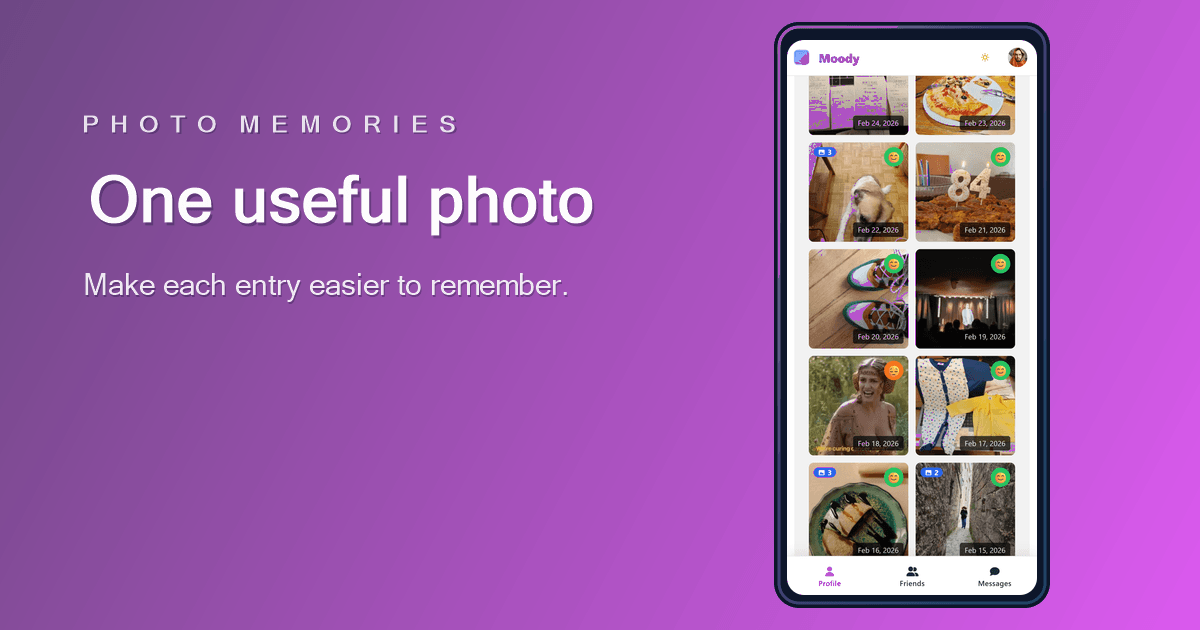
Photos work best when they explain the day, not when they turn your journal into another gallery to manage.
Read article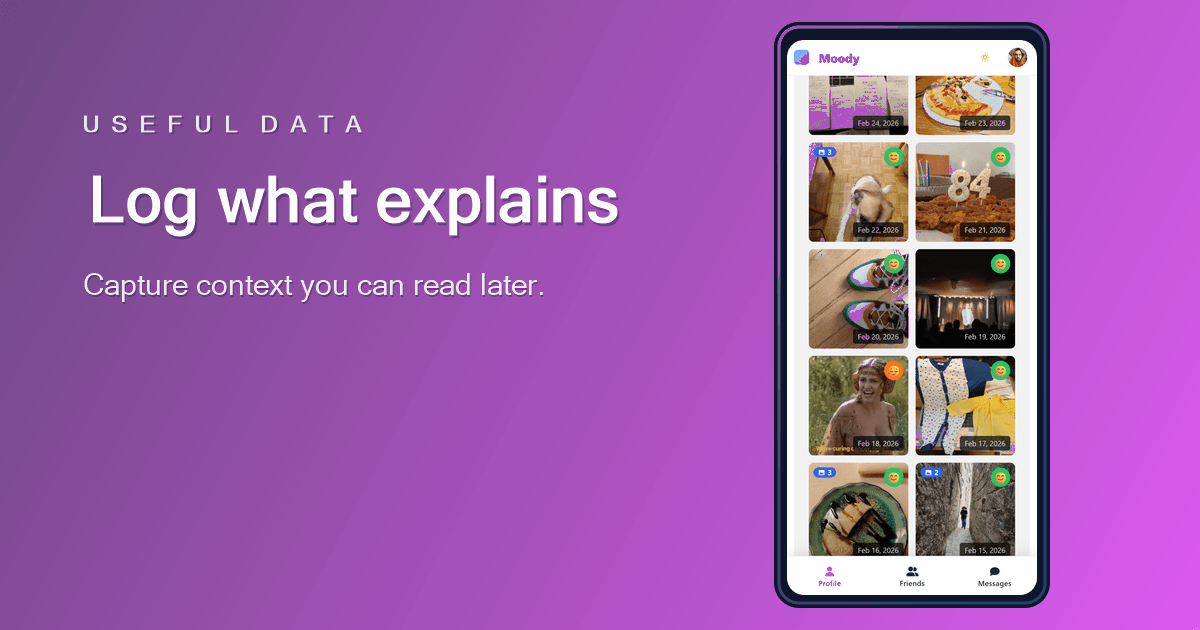
What to log in a mood tracker so the data becomes useful
The best mood tracker data is not the most detailed data. It is the data you can understand when you review it later.
Read article
How to track your mood daily with less friction
Daily mood tracking works best when the entry is small enough to repeat and clear enough to review later.
Read article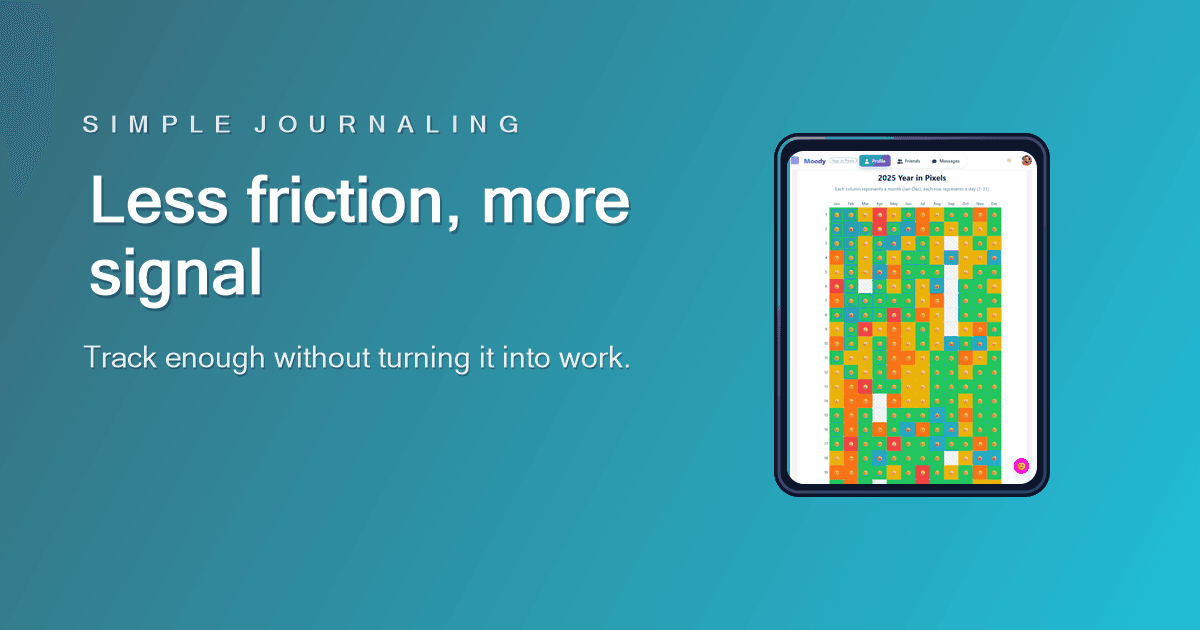
Mood tracking without overcomplicating your journal
A mood tracker should lower the effort of reflection, not create another task you feel behind on.
Read article