Mood tracking without overcomplicating your journal
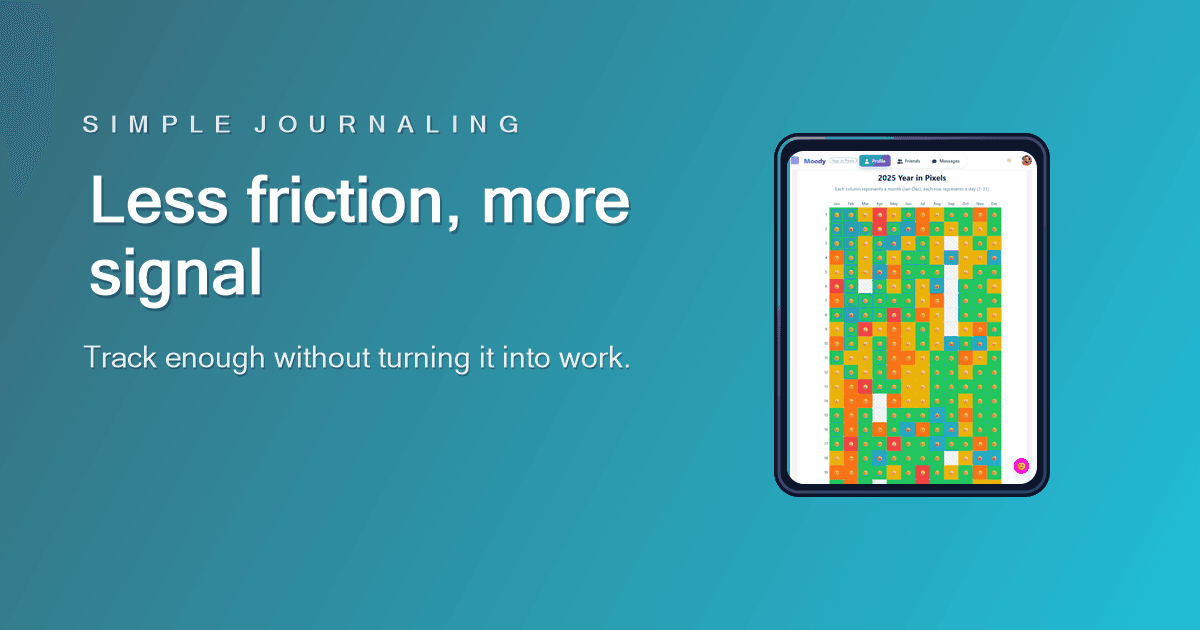
A mood tracker should lower the effort of reflection, not create another task you feel behind on.
Quick answer
People want a mood tracking routine that is useful without becoming another demanding journaling system.
Separate tracking from journaling
Journaling can be open-ended, emotional, and detailed. Tracking is different. It works because it is structured enough to repeat and compare. If you expect every mood entry to become a full journal page, the tracker will quickly feel too heavy.
The cleanest approach is to let the tracker capture the daily signal and reserve longer writing for days that need it. This protects the habit while still leaving space for deeper reflection.
Choose repeatable fields before expressive fields
Repeatable fields make your history readable. A mood score, a few activities, and an optional note create a record that can be scanned later. Expressive fields, like long writing, are still useful, but they should not be required every day.
Think of the tracker as a map. The map does not need every detail of the terrain. It needs enough landmarks to help you see where you have been.

Use rules that reduce decisions
Overcomplication often comes from too many decisions: which emotion should I choose, how much should I write, whether I should add a photo, whether the entry is accurate enough. A few simple rules reduce that friction.
For example: choose the closest mood, add a note only when the score needs explanation, add a photo only when it helps memory, and review once a week instead of judging every entry.
- Closest mood is better than no entry.
- One useful detail is enough.
- Review patterns, not isolated imperfections.
Let gaps exist
A simple mood tracker should tolerate real life. Missing a day, skipping a note, or logging a rough estimate does not ruin the history. It keeps the habit human.
The point is not to create a perfect archive. The point is to create a record that helps you remember, notice, and ask better questions about your days.
FAQ
Start a clearer mood history
Moody keeps the daily entry lightweight so the history can grow without turning into a chore.
Read other articles

How to track your mood daily with less friction
Daily mood tracking works best when the entry is small enough to repeat and clear enough to review later.
Read article
What to log in a mood tracker so the data becomes useful
The best mood tracker data is not the most detailed data. It is the data you can understand when you review it later.
Read article
How to review your week with a mood tracker in 10 minutes
A weekly review should help you understand the shape of the week, not turn your mood history into a performance report.
Read article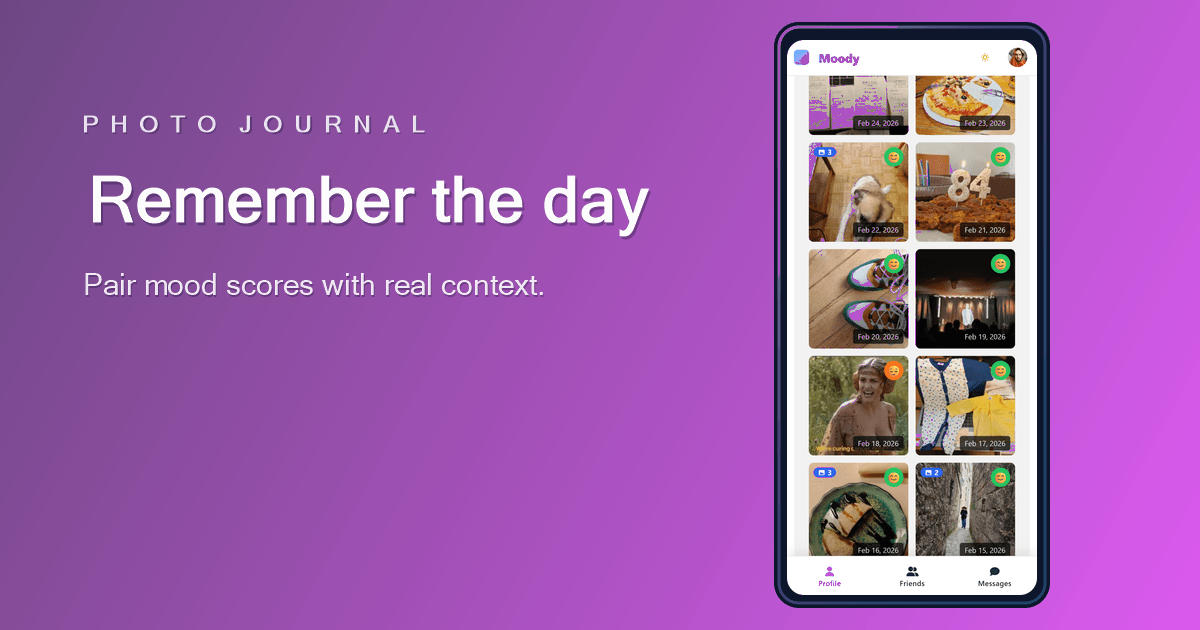
Why a mood journal with photos is more useful than a score alone
A score tells you how the day felt. A photo helps you remember what the day was actually made of.
Read article
How to use photos in a mood journal without cluttering the experience
Photos work best when they explain the day, not when they turn your journal into another gallery to manage.
Read article